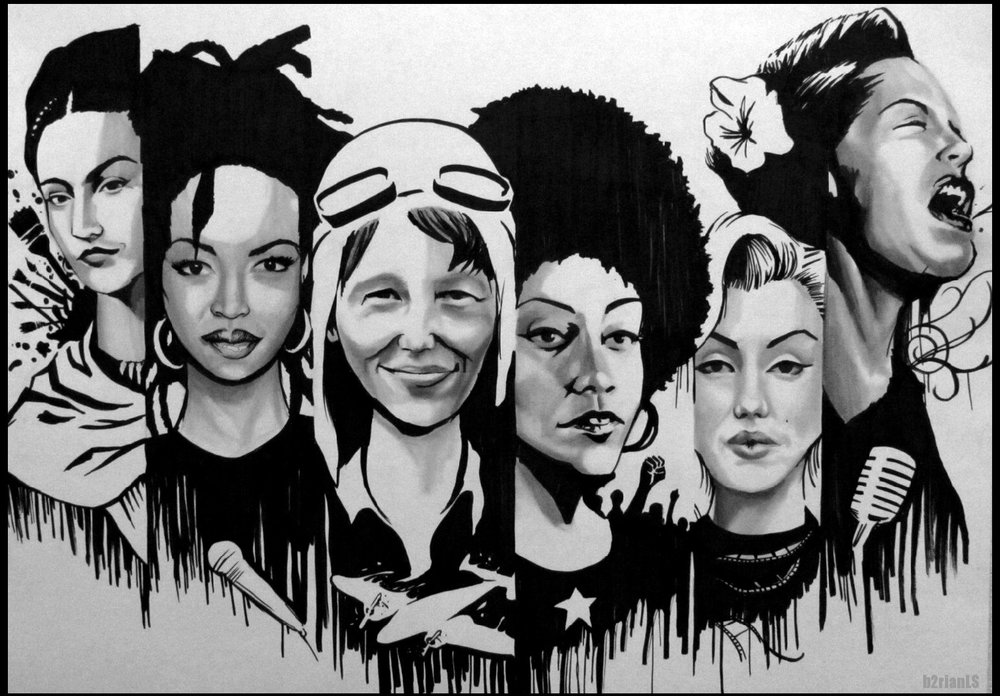
March is Women’s History Month and there’s no better time to celebrate their contributions. Here are some fascinating facts about women’s history that will showcase some standouts, accomplishments, impacts and just how far they have come.
By the Numbers
Here you’ll find some amazing stats about women in the world today.
- Today, 71% of moms with kids under 18 work. In 1975, fewer than 47% did. Once upon a time, the idea of women working outside of the home was frowned upon and most women who did so worked as maids, seamstresses, took in the laundry or worked in one of the traditionally female fields. Today, more women not only work outside the home but hold a wider variety of jobs, with some even making it to the top of business, technology and science fields.
- Women currently hold 17% of Congressional and Senate seats and 18% of gubernatorial positions in the U.S. While women are still underrepresented in political life, the current state of things is a far cry from a time when women weren’t even allowed to vote — a mere 90 years ago.
- In almost every country in the world, the life expectancy for women is higher than men. For virtually all causes of death at all ages, mortality rates are higher for men. Scientists aren’t entirely sure why this is the case, but believe it might have to do with the presence of estrogen in the body improving immune function.
- Approximately 14% of active members in the U.S. armed forces today are women. In 1950, women comprised less than 2% of the U.S. military. Today, women play an active role in serving their country through military service, but many in years past would simply disguise themselves as men in order to gain access to the battlefield, including well-known examples like Frances Clayton in the American Civil War.
- Over 60 percent of college degrees awarded in the U.S. every year are earned by women. In fact, women are more likely than men to get a high school diploma as well, and the numbers are only expected to rise in the coming years.
- The two highest IQs ever recorded, through standardized testing, both belong to women. One of these high IQ women is the columnist and author Marilyn Vos Savant. Of course, these numbers should be taken with a grain of salt, as IQ tests aren’t perfect in measuring intelligence, but it does help show that women aren’t inferior to men in intelligence – as was claimed for centuries.
- More American women work in the education, health services, and social assistance industries than any other. It seems that while women are moving into the workforce in large numbers, they’re still taking on traditionally female positions like teaching, nursing and social services. These three industries employ nearly one-third of all female workers.
Sports
Check out these facts to learn more about women in sports throughout recorded history.
- No women or girls were allowed at the first Olympics, but the Games of Hera, featuring footraces for women, were held every four years. In fact, women were not even allowed to watch the Olympic games or encouraged to participate in athletics (with the exception of the Spartans) so that the games existed at all is surprising. At their inception, the games only included that one event.
- At the first Winter Olympic Games in 1924, the only event open to women was figure skating. Only 15 women participated in these games, something that would change drastically over the decades.
- Women were not allowed to compete in track and field events at the Olympics until 1928. The ancient Greeks and Romans may have let women run in footraces in the Heraen Games, but when it came to the Olympics, both ancient and modern, these events were off limits to women until 1928. Unfortunately, some of the events were too much for the untrained female athletes, and because many collapsed after the end of the 800-meter race, it was banned until 1960.
- Roberta Gibb was the first woman to run and finish the Boston Marathon in 1966. Of course, she didn’t get official credit for it, as women were not allowed to enter the race until 1972, but her wins, in ’66, ’67, and ’68 seriously challenged long-held beliefs about the athletic prowess of women.
- Virne “Jackie” Mitchell, a pitcher, was the first woman in professional baseball. While women still don’t have much of a presence in baseball today, Mitchell proved that it wasn’t because they couldn’t play. During an exhibition game, she struck out both Babe Ruth and Lou Gehrig. Her performance probably played a part in baseball commissioner Kenesaw Mountain Landis banning women from the sport later that year.
- Mary, Queen of Scots is reported to be the first woman to play golf in Scotland. Golf today is still seen as a man’s sport, but this powerful and scandalous queen couldn’t have cared less. In fact, she even went out to play golf a few days after her husband Lord Darnley’s murder.
- Donald Walker’s book, Exercise for Ladies, warns women against horseback riding because it deforms the lower part of the body. While this book was published in 1837, the views it documented about women doing any kind of exertion or exercise were to hold throughout the Victorian era and beyond.
Culture
Learn more about the role women have played in art, music, and literature from these facts.
- The world’s first novel, The Tale of Genji, was published in Japan around A.D. 1000 by female author Murasaki Shikibu. It is still revered today for its masterful observations about court life and has been translated into dozens of languages.
- In 1921, American novelist Edith Wharton was the first woman to receive a Pulitzer Prize for fiction. She won the award for her novel The Age of Innocence, a story set in upper-class New York during the 1870s.
- Women often wrote under pen names in times when it was not seen as appropriate for them to contribute to the literature. Even some female authors who are highly acclaimed today had to resort to fake names like Jane Austen, the Bronte Sisters, Mary Ann Evans (perhaps better known by her pen name George Eliot), and Louisa May Alcott.
- In the early years of the blues, from 1910 to 1925, the vast majority of singers were women. It might go against the common idea of just what the blues are or what they should sound like, but new research has found that some of the biggest players in the form of music were actually women.
- In an era when female painters had to struggle for acceptance, Artemesia Gentileschi was the first female to be accepted by the Accademia di Arte del Disegno in Florence. A follower of the style popularized by Caravaggio, her work is often particularly adept at bringing to life the passion and suffering of mythological and biblical women.
Amazing Women
These amazing women make for some pretty inspiring facts, perfect for Women’s History Month.
- Marie Curie is the only woman to ever win two Nobel Prizes. Her first award was for physics for her work on spontaneous radiation with her husband, with her second being in Chemistry for her studies of radioactivity.
- Hatshepsut was one of the most powerful women in the ancient world and the one and only female pharaoh in recorded history. She was the fifth pharaoh of the Eighteenth Dynasty of Ancient Egypt after taking over as a supposed regent for her son and reigned for over twenty years. While accounts seem to paint her reign as a favorable one, her images have been defaced on temples and inscriptions as though they meant to wipe her existence from history.
- Martha Wright Griffiths, an American lawyer, and judge pushed through the Sex Discrimination Act in 1964 as part of the Civil Rights Act. This act has helped protect countless women on the job and in everyday life from discrimination based on their gender.
- Journalist Nellie Bly put Jules Verne’s character Phileas Fogg to shame when she completed an around the world journey in only seventy-two days– quite a feat before the invention of the airplane. Bly is also well-known for her expose on mental institutions, a project for which she had to fake psychological illness to gain access to the facilities.
- Jane Addams was the first woman to be awarded the Nobel Peace Prize. Because of her work with the Hull House, the public philosopher, writer, leader, and suffragist went down as one of the most influential and prolific women in American history.
- Upon her husband’s death, Cherokee leader Nancy Ward took his place in a 1775 battle against the Creeks, and led the Cherokee to victory. After the victory, she became head of the Woman’s Council and a member of the Council of Chiefs, playing a key role in social and political changes to the Cherokee nation throughout her life.
- In 1777, sixteen-year-old Sybil Ludington raced through the night to warn New York patriots that the British were attacking nearby Danbury, CT, where munitions and supplies for the entire region were stored during the heat of the Revolutionary War. While Paul Revere gets all the glory for nighttime rides, her journey took her twice the distance and helped the troops prepare and repel a British attack.
- Elizabeth Cady Stanton and Susan B. Anthony spent their lives fighting for women’s suffrage, but neither lived long enough to see the Amendment granting them the right to vote. Stanton passed away in 1902, decades before women finally won out, and Anthony in 1906 only a few years later.
- African-American performer Josephine Baker was working in France during WWII, but not only as a singer, dancer, and actress. She was also helping the war movement, smuggling numerous messages to French soldiers. She often hid messages inside her dress or concealed with invisible ink on her sheet music. Baker’s work in the war is only part of what makes her such an amazing figure, as she was the first African American female to star in a major motion picture, perform in a concert hall and played a big role in the Civil Rights Movement.
Famous Firsts
Paving the way for generations to come, these women took down barriers to become the first of their kind in a wide range of fields.
- In 1853 Antoinette Blackwell became the first American woman to be ordained a minister in a recognized denomination. Impressive, considering there are still only a handful of female ministers nationwide today.
- The earliest recorded female physician was Merit Ptah, a doctor in ancient Egypt who lived around 2700 B.C. Many historians believe she may be the first woman recorded by name in the history of all of the sciences, making her achievement all the more impressive.
- The first woman to rule a country as an elected leader in the modern era was Sirimavo Bandaranaike of Sri Lanka, who was elected as prime minister of the island nation in 1960 and later re-elected in 1970. She is still one of only a handful of female heads of states, though numbers are growing with female leaders being recently elected in places like Brazil, Switzerland, Costa Rice, Lithuania, and Gabon.
- In 1756, during America’s Colonial period, Lydia Chapin Taft became the first woman to legally vote with the consent of the electorate. While all women didn’t enjoy this privilege until 1920, Taft was allowed to vote because her husband, a powerful local figure, had passed away right before a major town vote. She was allowed to step in in his stead.
- The first woman to run for U.S. president was Victoria Woodhull, who campaigned for the office in 1872 under the National Woman’s Suffrage Association. While women would not be granted the right to vote by a constitutional amendment for nearly 50 years, there were no laws prohibiting one from running for the chief executive position.
- The first female governor of a U.S. state was Wyoming governor Nellie Tayloe Ross, elected in 1924. Wyoming was also the first state to give women the right to vote, enacting women’s suffrage in 1869, making it a surprising leader in women’s rights.
- The first female member of a president’s cabinet was Frances Perkins, Secretary of Labor under FDR. She remained in office for the duration of FDR’s terms and helped put together the labor programs needed for the New Deal to succeed.
- The first person to make the daring attempt to go over Niagara Falls in a wooden barrel was a woman. On October 24, 1901, Annie Edson Taylor, a forty-three-year-old schoolteacher from Michigan plunged over the falls. She survived with only a small gash on her head but swore to never take them on again.
- Jeannette Rankin, a Republican from Montana, was the first woman elected to serve in Congress. She was elected in both 1916 and 1940. A lifelong pacifist, she was the only member of Congress to vote against entering WWII.
- On May 15, 1809, Mary Dixon Kies received the first U.S. patent issued to a woman for inventing a process for weaving straw with silk or thread. Before then, most women inventors didn’t bother to patent their new inventions because they couldn’t legally own property independent of their husbands. Few could get the support necessary to turn their ideas into reality.
Historical Happenings
Learn more about women in history from these interesting facts.
- Wyoming was the first state to grant women the right to vote. It was also the first state to elect a female governor, Nellie Tayloe Ross.
- The first country to grant women the right to vote in the modern era was New Zealand in 1893. In this same year, Elizabeth Yates also become major of Onehunga, the first-ever female mayor anywhere in the British empire.
- In 1770, a bill proposing that women using makeup should be punished for witchcraft was put forward to the British Parliament. The use of makeup was frowned upon during this period for the effect it would have on men, and women who were thought to be luring men in with scents, makeup, wigs or other cosmetics were thought to be performing the devils’ work by inciting lustfulness. Even the Queen took a hard stance on makeup, calling it “impolite.”
- On Nov. 26, 1916 birth control activist Margaret Sanger was arrested for distributing birth control information. While Sanger’s views on race are questionable, her efforts to provide women with control over their reproduction were not. Birth control is still a hot issue among many, with some conservative groups condemning it all together.
- Think that factory work was always done by men? In fact, during the 19th century, factory workers were primarily young, single women. Men and married women stayed home to work the farm or manage the house.
- Until 1846, the practice of obstetrics was a female-dominated field. It was then that most medical colleges decided women could not attend and the newly founded American Medical Association barred women. Legislation intended to regulate the medical profession also made it nearly impossible for young women to pursue a medical career. Today, however, obstetrics is a female-dominated field once again.
- Betsy Ross probably didn’t make the first American flag. While she may have been a flagmaker, patriot, and businesswoman of note, there is little evidence to suggest that Betsy Ross actually made the first flag. In fact, the first retellings of this story didn’t happen until years after her death.
Innovative Women
These women came up with new and innovative ideas well worth reading about.
- In 1903, Mary Anderson was granted a patent for the windshield wiper. It would become standard equipment on cars by 1916. She isn’t alone in her inventiveness. Women have also invented such things as industrial lathes, white out, bras, non-reflective glass, the dishwasher, disposable diapers, petroleum refining methods and much, much more.
- Amelia Jenks Bloomer didn’t invent the bloomer, but she helped popularize this new article of clothing in the early 1850s, which now bears her name, that would help women be more active and free in their movement. Unfortunately, the style was much ridiculed and Bloomer had to revert to traditional dresses by 1859, but she remained an active member of suffrage movements throughout her life.
- 40s movie actress, Hedy Lamarr wasn’t just a pretty face, she was also an inventor. Hoping to find a way to contribute to the war effort during World War II, Lamarr developed a radio-controlled torpedo device which used “frequency hopping” to prevent the signals from the torpedoes from being jammed. While the technology wasn’t adopted for WWII, it was used in subsequent conflicts.
- Susan Kare developed most of the interface elements for Apple Macintosh. You might not think that women have played a huge role in the development of computer technology, but in this case, you’d be wrong. Kare helped develop the bulk of those little icons early Mac users clicked on every day. Kare left Apple in the ’80s and is still working with innovating new technologies and improving a design.
Women’s History History Month Booklist
Ruth Bader Ginsburg
In this large, comprehensive, revelatory biography, Jane De Hart explores the central experiences that crucially shaped Ginsburg’s passion for justice, her advocacy for gender equality, her meticulous jurisprudence: her desire to make We the People more united and our union more perfect.
Dear Ijeawele, or A Feminist Manifesto in Fifteen Suggestions
A few years ago, Chimamanda Ngozi Adichie received a letter from a dear friend from childhood, asking her how to raise her baby girl as a feminist. Dear Ijeawele is Adichie’s letter of response. Here are fifteen invaluable suggestions–compelling, direct, wryly funny, and perceptive–for how to empower a daughter to become a strong, independent woman.
Anne Frank’s Diary: The Graphic Adaptation
The Diary of a Young Girl, for both young readers and adults, continues to capture the remarkable spirit of Anne Frank, who for a time survived the worst horror the modern world has seen—and who remained triumphantly and heartbreakingly human throughout her ordeal.
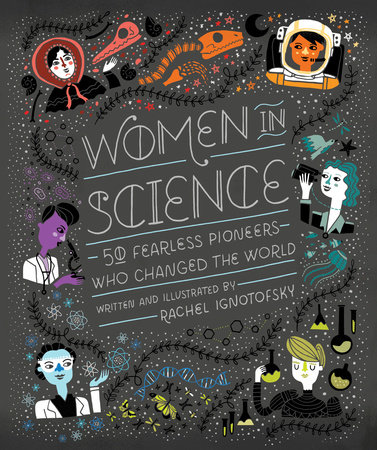
Women in Science
Rachel Ignotofsky’s Women in Science highlights the contributions of fifty notable women to the fields of science, technology, engineering, and mathematics (STEM) from the ancient to the modern world.
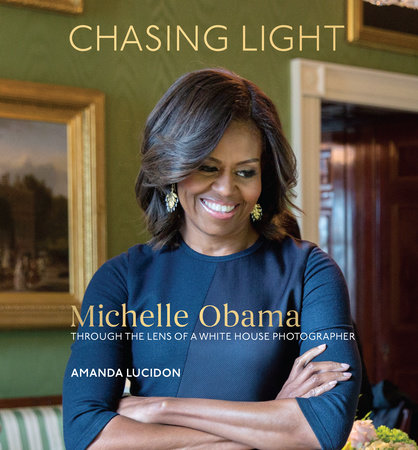
Chasing Light
A collection of striking and intimate photographs of Michelle Obama—many never before seen—coupled with personal reflections and behind-the-scenes stories from Official White House Photographer Amanda Lucidon, presented in a deluxe format.
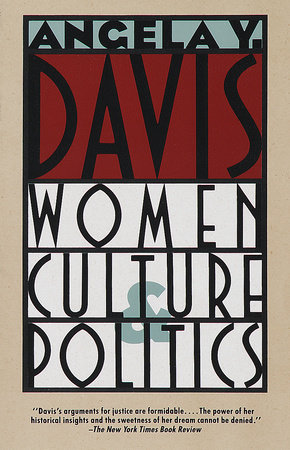
Women, Culture & Politics
A collection of speeches and writings by political activist Angela Davis which address the political and social changes of the past decade as they are concerned with the struggle for racial, sexual, and economic equality.
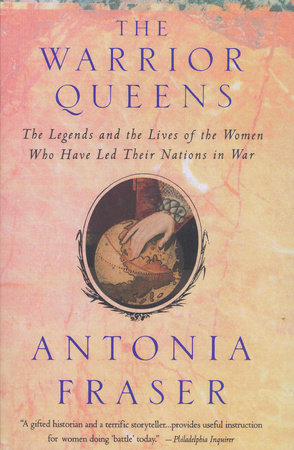
Warrior Queens
In this panoramic work of history, Lady Antonia Fraser looks at women who led armies and empires: Cleopatra, Isabella of Spain, Jinga Mbandi, Margaret Thatcher, and Indira Gandhi, among others.
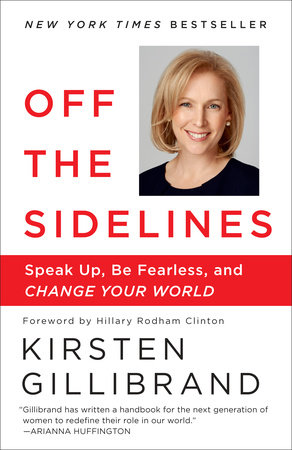
Off the Sidelines
Off the Sidelines is a playbook for women who want to step up, whether in Congress or the boardroom or the local PTA. Kirsten Gillibrand lays bare the highs and lows of being a young (pregnant!) woman in Congress, and the joys and sacrifices every working mother shares.
-
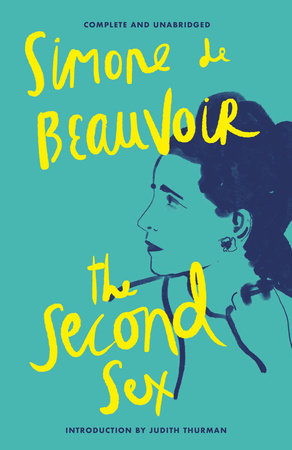
The Second Sex
Simone de Beauvoir’s essential masterwork is a powerful analysis of the Western notion of “woman,” and a revolutionary exploration of inequality and otherness.
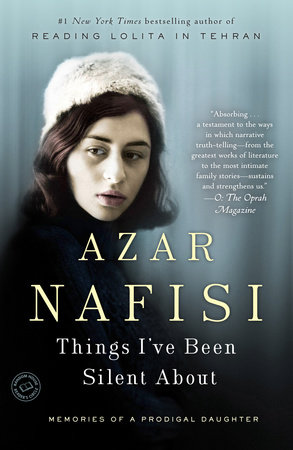
Things I’ve Been Silent About
In this stunning personal story of growing up in Iran, Azar Nafisi shares her memories of living in thrall to a powerful and complex mother against the backdrop of a country’s political revolution.
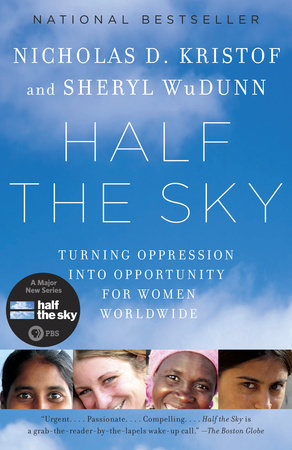
Half the Sky
With Pulitzer Prize winners Nicholas D. Kristof and Sheryl WuDunn as our guides, we undertake an odyssey through Africa and Asia to meet the extraordinary women struggling there, among them a Cambodian teenager sold into sex slavery and an Ethiopian woman who suffered devastating injuries in childbirth. Drawing on the breadth of their combined reporting experience, Kristof and WuDunn depict our world with anger, sadness, clarity, and, ultimately, hope.
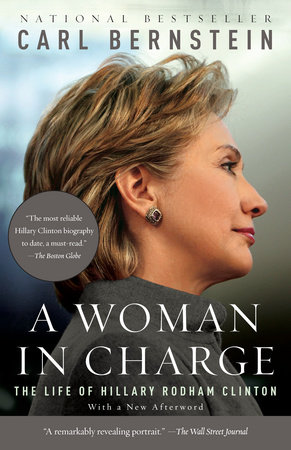
A Woman in Charge
From Pulitzer Prize-winning journalist Carl Bernstein, the nuanced, definitive biography of one of the most controversial and widely misunderstood figures of our time: the woman running a historic campaign as the 2016 Democratic presidential nominee—Hillary Rodham Clinton.
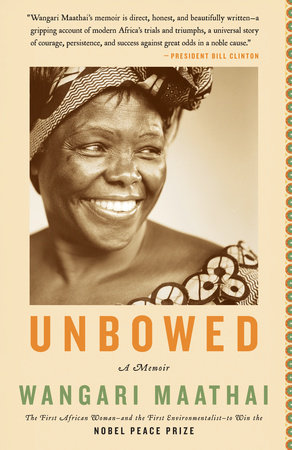
Unbowed
In Unbowed, Nobel Prize winner Wangari Maathai recounts her extraordinary journey from her childhood in rural Kenya to the world stage. When Maathai founded the Green Belt Movement in 1977, she began a vital poor people’s environmental movement, focused on the empowerment of women, that soon spread across Africa. Persevering through run-ins with the Kenyan government and personal losses, and jailed and beaten on numerous occasions, Maathai continued to fight tirelessly to save Kenya’s forests and to restore democracy to her beloved country.
The Portable Nineteenth-Century African American Women Writers
The Portable Nineteenth-Century African American Women Writers is the most comprehensive anthology of its kind: an extraordinary range of voices offering the expressions of African American women in print before, during, and after the Civil War.
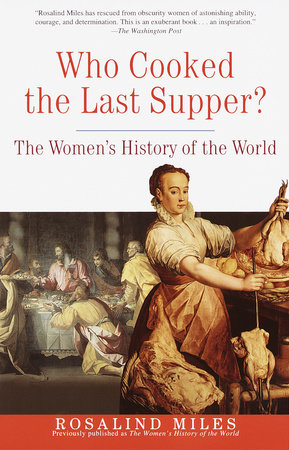
Who Cooked the Last Supper?
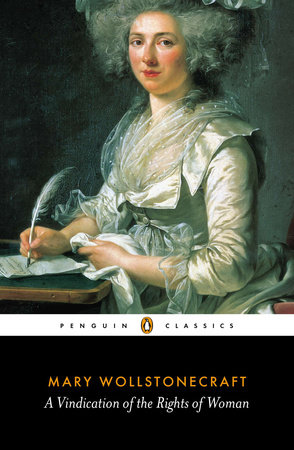
Without politics or polemics, Rosalind Miles’ brilliant and witty book overturns centuries of preconceptions to restore women to their rightful place at the center of culture, revolution, empire, war, and peace. Spiced with tales of individual women who have shaped civilization, celebrating the work and lives of women around the world, and distinguished by a wealth of research, Who Cooked the Last Supper? redefines our concept of historical reality. A Vindication of the Rights of Woman
Writing in an age when the call for the rights of man had brought revolution to America and France, Mary Wollstonecraft produced her own declaration of female independence in 1792. Passionate and forthright, A Vindication of the Rights of Woman attacked the prevailing view of docile, decorative femininity, and instead laid out the principles of emancipation: an equal education for girls and boys, an end to prejudice, and for women to become defined by their profession, not their partner.
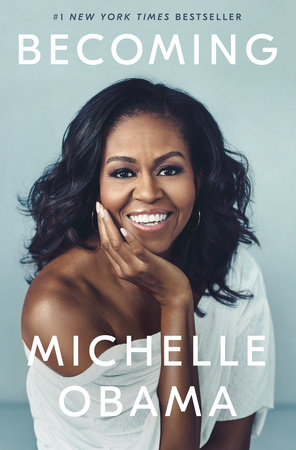
Becoming
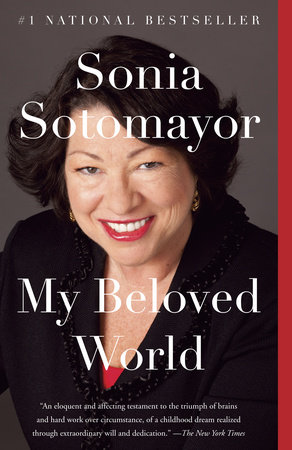
In her memoir, a work of deep reflection and mesmerizing storytelling, Michelle Obama invites readers into her world, chronicling the experiences that have shaped her—from her childhood on the South Side of Chicago to her years as an executive balancing the demands of motherhood and work, to her time spent at the world’s most famous address. My Beloved World
The first Hispanic and third woman appointed to the United States Supreme Court, Sonia Sotomayor has become an instant American icon. Now, with a candor and intimacy never undertaken by a sitting Justice, she recounts her life from a Bronx housing project to the federal bench, a journey that offers an inspiring testament to her own extraordinary determination and the power of believing in oneself.
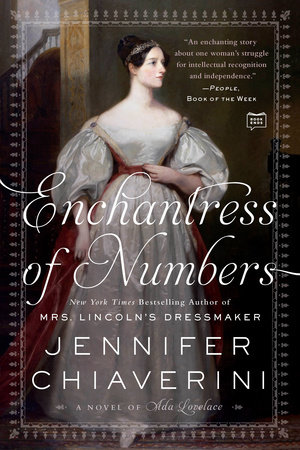
Enchantress of Numbers
Author Jennifer Chiaverini illuminates the fascinating life of Ada Byron King, Countess of Lovelace—Lord Byron’s daughter, the world’s first computer programmer, and a woman whose exceptional contributions to science and technology have been too long unsung.
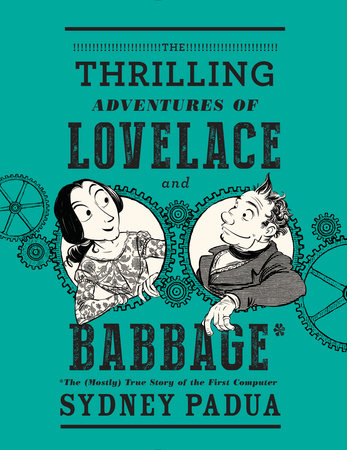
The Thrilling Adventures of Lovelace and Babbage
The Thrilling Adventures of Lovelace and Babbage by Sydney Padua presents a rollicking alternate reality in which Ada Lovelace and Charles Babbage do build the Difference Engine and then use it to build runaway economic models, battle the scourge of spelling errors, explore the wilder realms of mathematics, and, of course, fight crime—for the sake of both London and science.
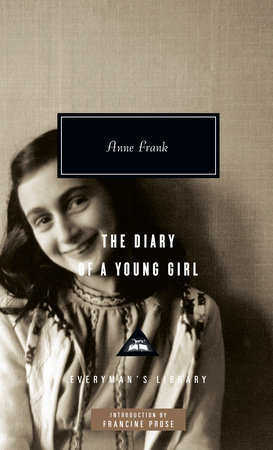
The Diary of a Young Girl
The Diary of a Young Girl is the record of two years in the life of a remarkable Jewish girl whose triumphant humanity in the face of unfathomable deprivation and fear has made the book one of the most enduring documents of our time.
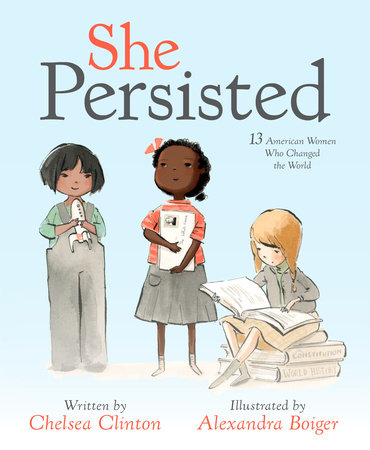
She Persisted
Chelsea Clinton introduces tiny feminists, mini activists and little kids who are ready to take on the world to thirteen inspirational women who never took no for an answer, and who always, inevitably and without fail, persisted.
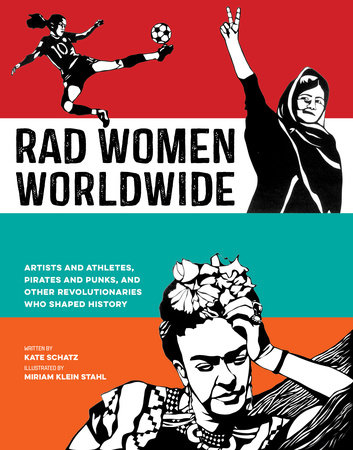
Rad Women Worldwide
Kate Schatz’s Rad Women Worldwide tells fresh, engaging, and amazing tales of perseverance and radical success by pairing well-researched and riveting biographies with powerful and expressive cut-paper portraits. The book features an array of diverse figures from 430 BCE to 2016, spanning 31 countries around the world.
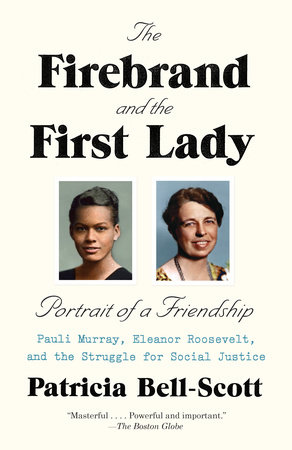
The Firebrand and the First Lady
A finalist for the Andrew Carnegie Medal for Excellence in Nonfiction, and longlisted for the National Book Award, Patricia Bell-Scott’s The Firebrand and the First Lady is the riveting history, two decades in the making, of how a brilliant writer-turned-activist and the first lady of the United States forged an enduring friendship that helped to alter the course of race and racism in America.
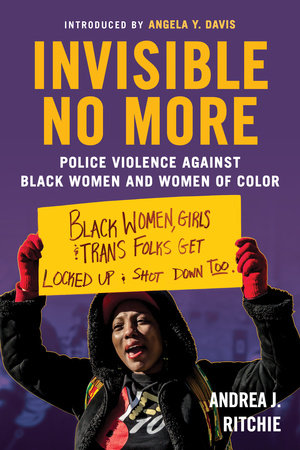
Invisible No More
A timely examination from Andrea Ritchie of the ways Black women, Indigenous women, and other women of color are uniquely affected by racial profiling, police brutality, and immigration enforcement.
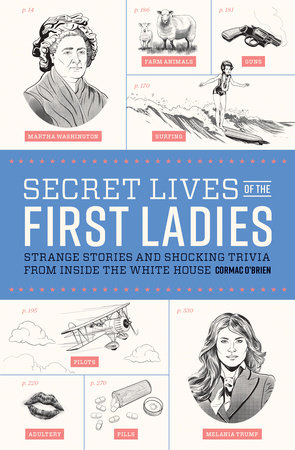
Secret Lives of the First Ladies
Whether she’s a leading lady, loyal spouse, or lightning rod for scandal, the First Lady of the United States has always been in the spotlight—and in 2017 that was truer than ever. This revised and expanded edition from Quirk’s best-selling Secret Lives series features outrageous and uncensored profiles of the women of the White House, from Martha Washington to Melania Trump.
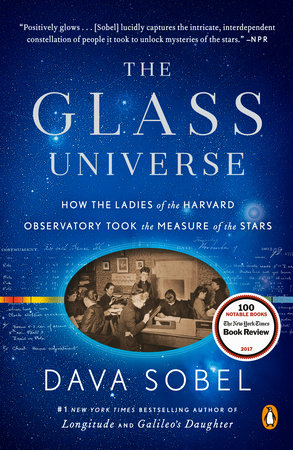
The Glass Universe
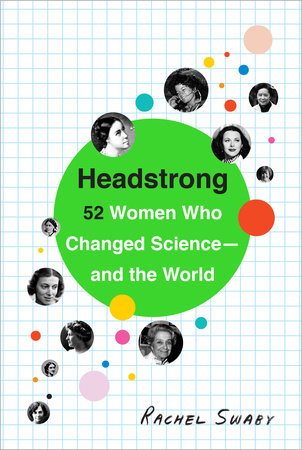
Elegantly written and enriched by excerpts from letters, diaries, and memoirs, Dava Sobel’s The Glass Universe is the hidden history of the women whose contributions to the burgeoning field of astronomy forever changed our understanding of the stars and our place in the universe. Headstrong
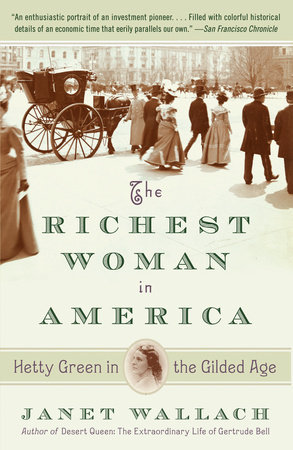
Covering Nobel Prize winners and major innovators, as well as lesser-known but hugely significant scientists who influence our every day, Rachel Swaby’s vibrant profiles span centuries of courageous thinkers and illustrate how each one’s ideas developed, from their first moment of scientific engagement through the research and discovery for which they’re best known. This fascinating tour reveals 52 women at their best—while encouraging and inspiring a new generation of girls to put on their lab coats. The Richest Woman in America
No woman in the Gilded Age made as much money as Hetty Green, America’s first female tycoon. A strong woman who forged her own path, she was worth at least $100 million by the end of her life in 1916—equal to about $2.5 billion today.
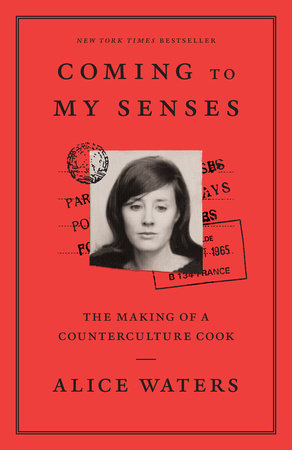
Coming to My Senses
The New York Times bestselling and critically acclaimed memoir from cultural icon and culinary standard bearer Alice Waters recalls the circuitous road and tumultuous times leading to the opening of what is arguably America’s most influential restaurant.
Catherine the Great: Portrait of a Woman
The Pulitzer Prize–winning author of Peter the Great, Nicholas and Alexandra, and The Romanovs returns with another masterpiece of narrative biography, the extraordinary story of an obscure German princess who became one of the most remarkable, powerful, and captivating women in history.
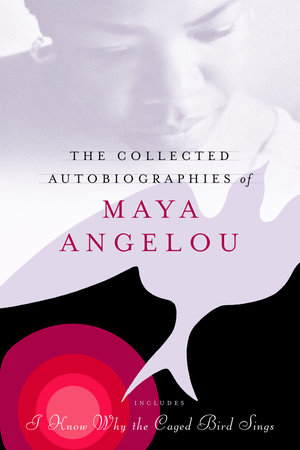
The Collected Autobiographies of Maya Angelou
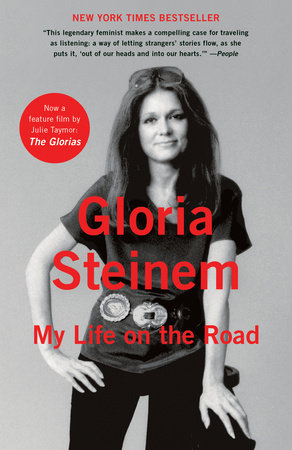
The Collected Autobiographies of Maya Angelou traces the best and worst of the American experience in an achingly personal way. Angelou has chronicled her remarkable journey and inspired people of every generation and nationality to embrace life with commitment and passion. My Life on the Road
Gloria Steinem—writer, activist, organizer, and inspiring leader—now tells a story she has never told before, a candid account of her life as a traveler, a listener, and a catalyst for change.
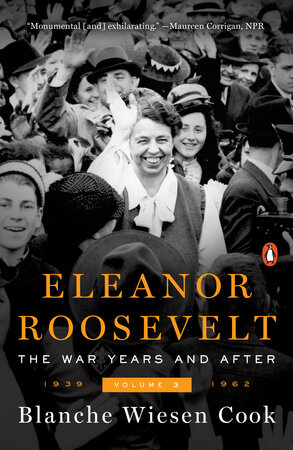
Eleanor Roosevelt, Volume 3
Historians, politicians, critics, and readers everywhere have praised Blanche Wiesen Cook’s biography of Eleanor Roosevelt as the essential portrait of a woman who towers over the twentieth century. The third and final volume takes us through World War II, FDR’s death, the founding of the UN, and Eleanor Roosevelt’s death in 1962. It follows the arc of war and the evolution of a marriage, as the first lady realized the cost of maintaining her principles even as the country and her husband were not prepared to adopt them.
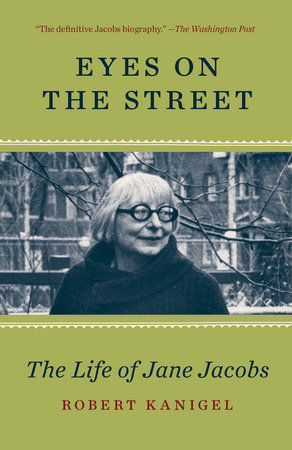
Eyes on the Street
Jane Jacobs was a phenomenal woman who wrote seven groundbreaking books, saved neighborhoods, stopped expressways, was arrested twice and engaged in thousands of impassioned debates—all of which she won.
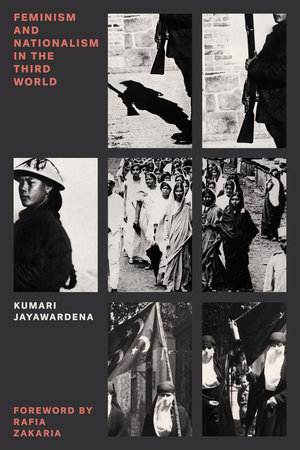
Feminism and Nationalism in the Third World
A founding text of transnational feminism. For twenty-five years, Feminism and Nationalism in the Third World has been an essential primer on the late nineteenth- and early twentieth-century history of women’s movements in Asia and the Middle East. In this engaging and well-researched survey, Kumari Jayawardena presents feminism as it originated in the Third World, erupting from the specific struggles of women fighting against colonial power, for education or the vote, for safety, and against poverty and inequality.
-
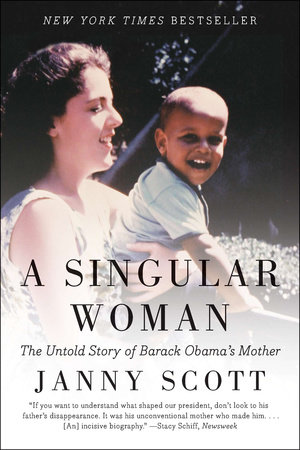
A Singular Woman
Barack Obama has written extensively about his father but credited his mother for “what is best in me.” Still, little is known about this fiercely independent, spirited woman who raised the man who became the first biracial president of the United States. In A Singular Woman, award-winning New York Times reporter Janny Scott tells the story of this unique woman, Stanley Ann Dunham, who broke many of the rules of her time, and shows how her fierce example helped influence the future president-and can serve as an inspiration to us all.
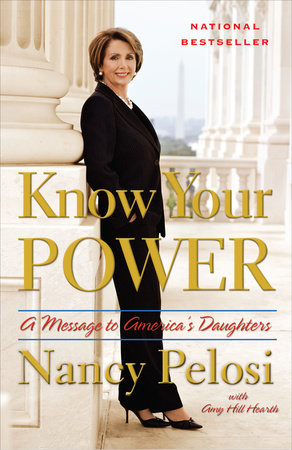
Know Your Power
When Nancy Pelosi became the first woman Speaker of the House, she made history. Now she continues to inspire women everywhere in this thought-provoking collection of wise words-her own and those of the important people who played pivotal roles in her journey. In this compelling book, she encourages mothers and grandmothers, daughters and granddaughters to never lose faith, to speak out and make their voices heard, to focus on what matters most and to follow their dreams wherever they may lead.
-
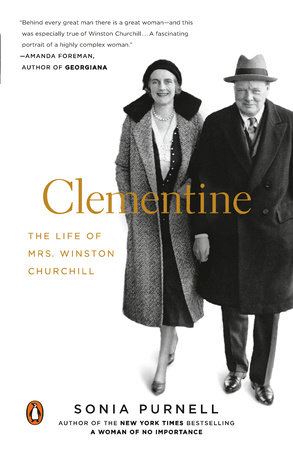
Clementine
A long over-due tribute to the extraordinary woman who was Winston Churchill’s closest confident, fiercest critic and shrewdest political advisor that captures the intimate dynamic of one of history’s most fateful marriages, as seen on The Crown.
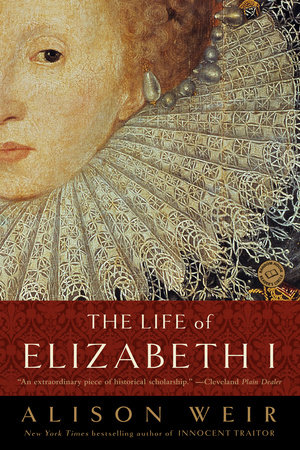
The Life of Elizabeth I
Perhaps the most influential sovereign England has ever known, Queen Elizabeth I remained an extremely private person throughout her reign, keeping her own counsel and sharing secrets with no one–not even her closest, most trusted advisers. Now, in this brilliantly researched, fascinating new book, acclaimed biographer Alison Weir shares provocative new interpretations and fresh insights on this enigmatic figure.
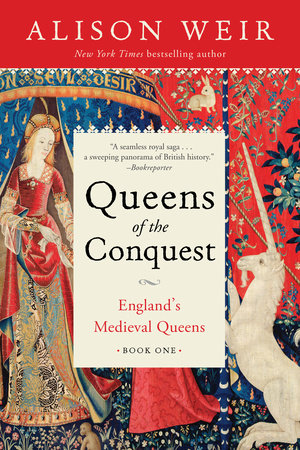
Queens of the Conquest
In the first volume of an exciting new series, bestselling author Alison Weir brings the dramatic reigns of England’s medieval queens to life. The lives of England’s medieval queens were packed with incident—love, intrigue, betrayal, adultery, and warfare—but their stories have been largely obscured by centuries of myth and omission. Now esteemed biographer Alison Weir provides a fresh perspective and restores these women to their rightful place in history.
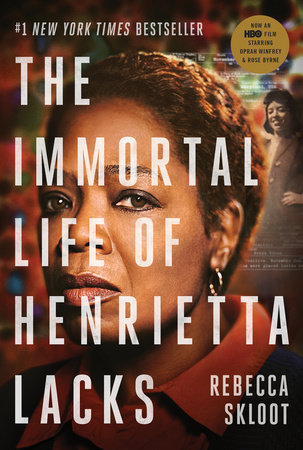
The Immortal Life of Henrietta Lacks
Henrietta Lacks’ cells—taken without her knowledge—became one of the most important tools in medicine. Rebecca Skloot takes us on an extraordinary journey, from the “colored” ward of Johns Hopkins Hospital in the 1950s to stark white laboratories with freezers full of HeLa cells; from Henrietta’s small, dying hometown of Clover, Virginia—a land of wooden slave quarters, faith healings, and voodoo—to East Baltimore today, where her children and grandchildren live and struggle with the legacy of her cells.
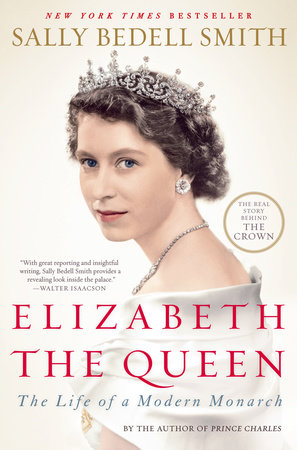
Elizabeth the Queen
From the moment of her ascension to the throne in 1952 at the age of twenty-five, Queen Elizabeth II has been the object of unparalleled scrutiny. Drawing on numerous interviews and never-before-revealed documents, acclaimed biographer Sally Bedell Smith pulls back the curtain to show in intimate detail the public and private lives of Queen Elizabeth II, who has led her country and Commonwealth through the wars and upheavals of the last sixty years with unparalleled composure, intelligence, and grace.
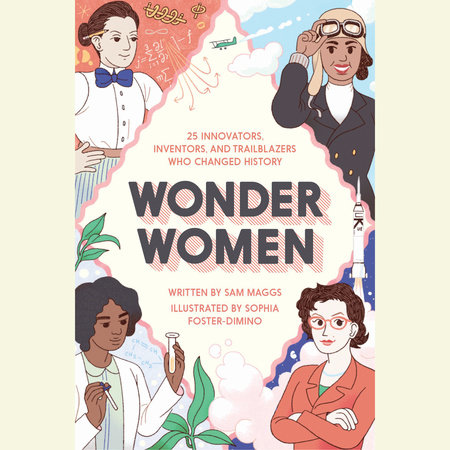
Wonder Women
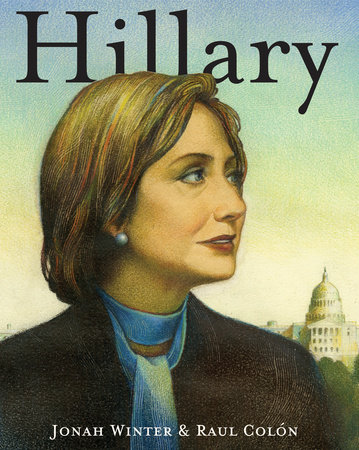
In Wonder Women, author Sam Maggs tells the stories of the brilliant, brainy, and totally rad women in history who broke barriers as scientists, engineers, mathematicians, adventurers, and inventors. Plus, interviews with real-life women in STEM careers, an extensive bibliography, and a guide to women-centric science and technology organizations—all to show the many ways the geeky girls of today can help to build the future. Hillary
In this beautiful and empowering picture-book biography of presidential nominee Hillary Rodham Clinton, New York Times bestselling author Winter and award-winning illustrator Colón illuminate her distinguished life and career. This stunning project follows Clinton from her early years as an outspoken student at Wellesley College and Yale Law School to marrying Bill Clinton and raising daughter Chelsea, to becoming First Lady of the United States and then a U.S. Senator and Secretary of State.
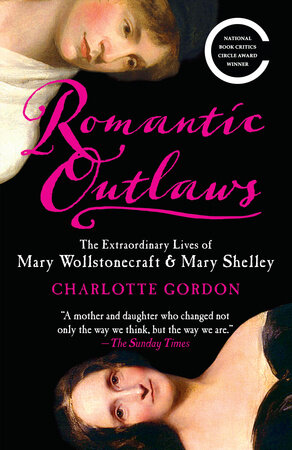
Romantic Outlaws
This groundbreaking dual biography brings to life a pioneering English feminist and the daughter she never knew. Mary Wollstonecraft and Mary Shelley have each been the subject of numerous biographies, yet no one has ever examined their lives in one book—until now. In Romantic Outlaws, Charlotte Gordon reunites two courageous women who should have shared their lives, but instead shared a powerful literary and feminist legacy.
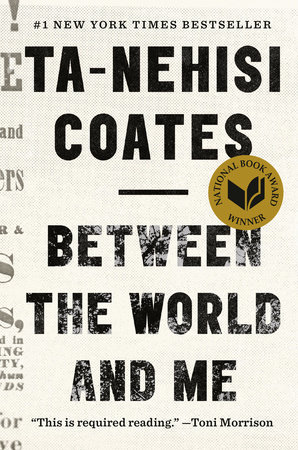
Between the World and Me
In a profound work that pivots from the biggest questions about American history and ideals to the most intimate concerns of a father for his son, Ta-Nehisi Coates offers a powerful new framework for understanding our nation’s history and current crisis. What is it like to inhabit a black body and find a way to live within it? And how can we all honestly reckon with this fraught history and free ourselves from its burden?


 BlaticStreet Communtiy /Wellness Center